About me

I am a Senior Research Fellow and LSST Community Scientist at the University of Nottingham, where I work on intracluster light (ICL), low-surface-brightness galaxy populations, and the use of diffuse stellar structures as tracers of the dark matter distribution.

My research sits at the interface of observational and theoretical astronomy. I combine controlled N-body simulations and Bayesian forward-modelling to build statistical frameworks connecting the spatial and kinematic properties of stripped stellar populations to satellite demographics and dark matter halo structure. I also work on realistic mock observations for current and forthcoming surveys (Rubin/LSST, Euclid), and develop open-source machine learning tools for large-dataset morphological analysis and object classification.

I am Co-Chair of the LSST Galaxies Science Collaboration Galaxy Morphology Working Group.
projects

Testing SIDM with the shape of the ICL

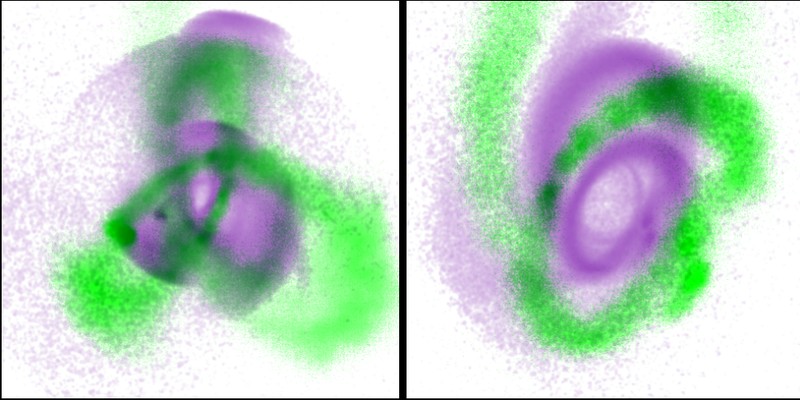
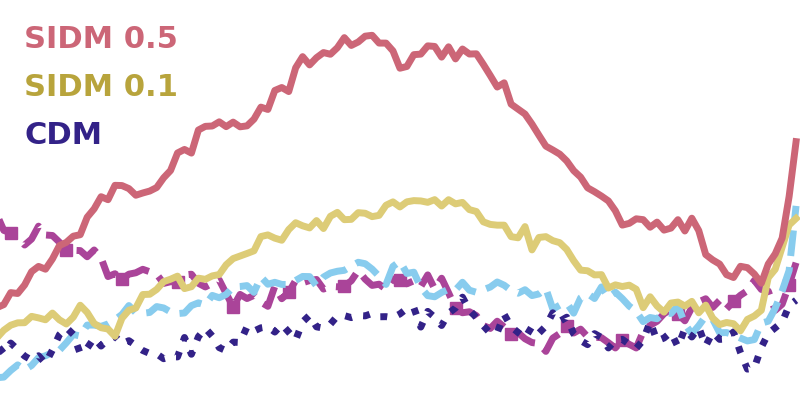
Is dark matter collisionless? In CDM the shape of the ICL closely follows that of the dark matter halo, but if dark matter self-interacts the inner halo becomes rounder while the ICL stays elongated. Comparing the two in galaxy clusters therefore offers a test of CDM against SIDM.

Intracluster lightSIDMDark matterGalaxy clusters
Intracluster light as a dark matter tracer

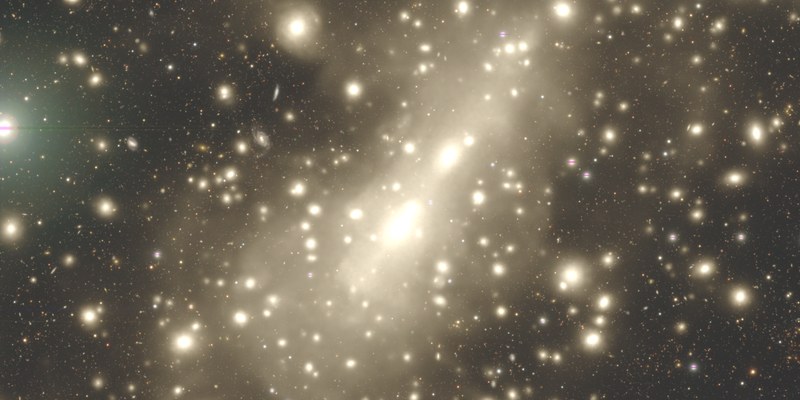
Can the ICL map the dark matter in clusters? Stars stripped from satellites end up more bound and more centrally concentrated than the stripped dark matter, by an amount set by the infalling satellite population. The ICL therefore jointly constrains the spatial distribution of the dark matter and the assembly history of the cluster.

Intracluster lightDark matterCluster assemblyGalaxy clusters
Structure and star formation in low-mass galaxies

Simulations that match the integrated properties of dwarf galaxies still differ sharply in their structure. Comparing simulated and observed dwarfs (paper I) and the coupling between their morphology and star formation history (paper II, in preparation) gives a more discriminating test of galaxy evolution models than integrated properties alone.

Dwarf galaxiesGalaxy evolutionStar formation historyMorphology
Unsupervised machine learning

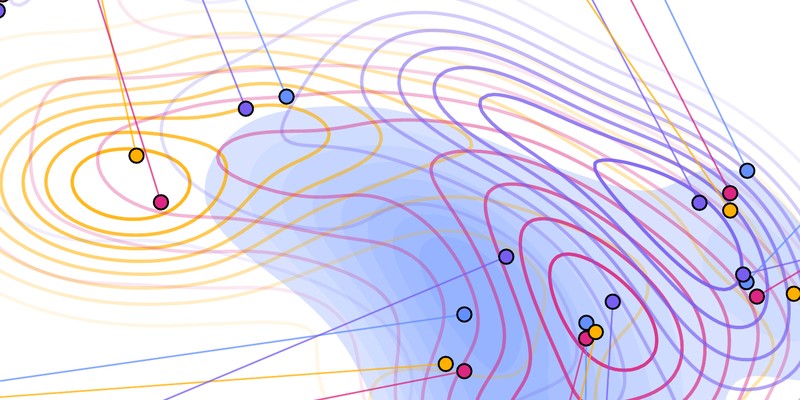
Surveys such as LSST will image far more galaxies than can be classified by eye. Unsupervised machine learning sorts galaxies into morphological groups without training sets, and recovers known trends of mass, colour and star formation with morphological type.

Galaxy morphologyMachine learningLSST
Low-surface-brightness science with Rubin

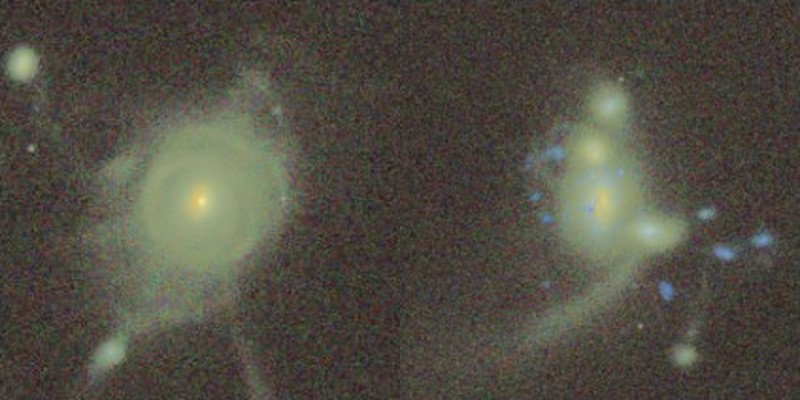
Tidal features record the merger histories of galaxies. Mock images from NewHorizon show that the 10-year LSST will recover around 80 per cent of the tidal-feature flux around Milky Way-mass and more massive galaxies, but that their classification depends strongly on depth and viewing angle.

Rubin/LSSTTidal featuresGalaxy mergers
Mock observations
Mock observations

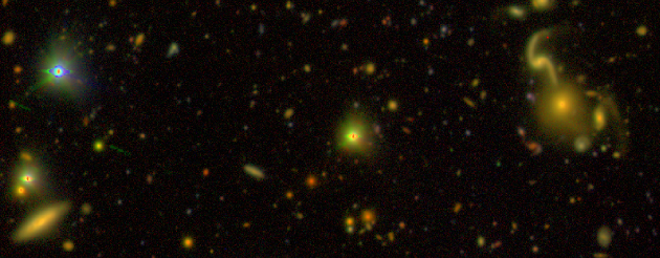
Comparing simulations with observations on equal terms requires putting simulated galaxies through the same observational effects as real data. Realistic mock images are used to test galaxy formation models and to prepare low-surface-brightness science with Rubin/LSST and Euclid.

Mock imagesSimulationsRubin/LSSTEuclid